Everything You Need to Know in 2026
For many New York seniors, the home is by far the largest asset they own — and after decades of rising values, it often holds more wealth than every retirement account combined. Yet that wealth usually just sits there while property taxes, insurance, and everyday costs keep climbing. A reverse mortgage is designed to change that: it lets older homeowners convert part of their home equity into tax-free funds without selling, moving, or taking on a monthly mortgage payment.
New York also has some of the strongest consumer protections in the country for these loans. This 2026 guide covers everything you need to know — how reverse mortgages work, the types available, the latest lending limits, the special rules that apply only in New York, what they cost, who qualifies, and how the process unfolds.
⚡ Quick Answer
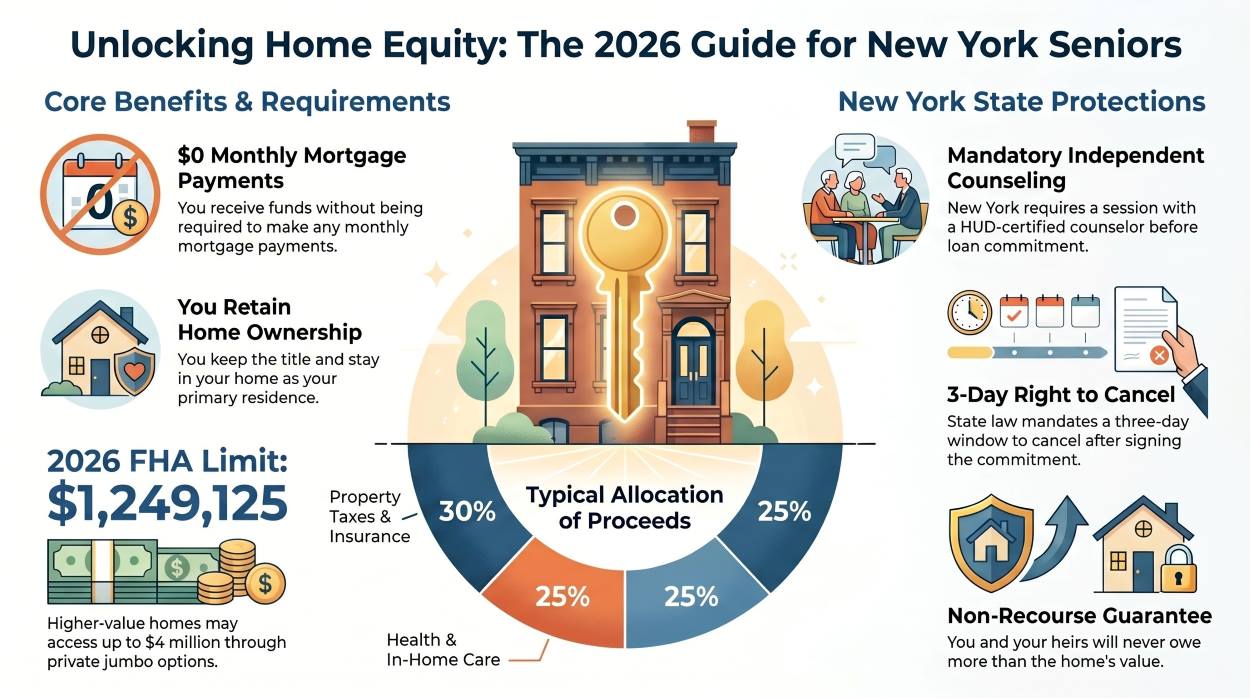
A reverse mortgage lets a New York homeowner aged 62 or older borrow against home equity and receive the money as a lump sum, monthly payments, or a line of credit — with no required monthly mortgage payment. You keep the title and stay in your home; the loan is repaid when the home is sold or is no longer your primary residence. In New York, the loan is regulated by state law and requires independent counseling and a 3-day right to cancel before it can close.
🔑 Key Takeaways
- A reverse mortgage turns New York home equity into tax-free cash with no monthly mortgage payment.
- You keep the title and stay in your home as long as it's your primary residence.
- The 2026 FHA limit is $1,249,125; higher-value homes may use a jumbo/proprietary option.
- New York requires independent counseling and a 3-day right to cancel.
- HECMs are non-recourse — you and your heirs never owe more than the home is worth.
📞 Have Questions About Reverse Mortgages in New York?
Talk with a licensed New York specialist and get a free, no-obligation estimate based on your home.
What Is a Reverse Mortgage?
With a traditional mortgage, you pay the lender every month. A reverse mortgage flips that relationship: the lender pays you, drawing from equity you've already built. There's no monthly mortgage payment to make. Interest is added to the loan balance over time rather than billed to you, and repayment is deferred until you sell the home, move out permanently, or pass away. Throughout, you remain the owner on the title. Your ongoing responsibilities are the ones you already have — property taxes, homeowners insurance, and basic upkeep.
How much you can access depends on the age of the youngest borrower, your home's appraised value, current interest rates, and the program limits. Because New York home values — especially downstate — run well above the national average, many homeowners here qualify for substantial proceeds.
Types of Reverse Mortgages Available in New York
"Reverse mortgage" isn't a single product. Four main options exist, and the right one depends on your home's value and your goals.
| Type | Best Suited For | What Makes It Different |
|---|---|---|
| HECM (FHA-insured) | Most homeowners with homes up to about $1.25M | The standard, federally-insured reverse mortgage with flexible payouts and strong protections. |
| HECM for Purchase | Those who want to move rather than stay put | Buy a new home and set up the reverse mortgage in one transaction — no monthly payment on the new home. |
| Jumbo / Proprietary | High-value homes above the FHA limit (common downstate) | Privately insured; loan amounts can reach up to $4 million. |
| Single-Purpose | Limited budgets, one specific need | Offered by some government or nonprofit programs for a defined purpose, such as property taxes or repairs. |
💡 On a phone? Swipe the table left and right to see every column.
2026 Lending Limits and What New York Homes Are Worth
For 2026, the FHA caps the home value it will count for a HECM at $1,249,125. Homes worth more than that don't lose out entirely — a jumbo/proprietary option can account for the excess. Here's how typical New York values compare against that cap (approximate, early 2026):
Approximate values scaled against the 2026 FHA limit. Downstate homes are the most likely to benefit from a jumbo option.
🧮 Not Sure Which Option Fits Your Home?
We'll compare your choices in plain English and run the numbers for your specific New York property.
New York's Special Reverse Mortgage Protections
New York regulates reverse mortgages more closely than most states, under Real Property Law §280, §280-a, and §280-b, with oversight from the New York State Department of Financial Services (DFS). These rules exist specifically to protect older borrowers:
- Independent counseling is required. Before a loan commitment, you must be counseled by a HUD-certified counselor, an attorney, or a local Office for the Aging — and New York emphasizes the availability of in-person counseling.
- A 3-day right to cancel. State rules require a three-day cancellation window after you sign the commitment, giving you time to reconsider.
- Clear disclosures. Lenders must provide state-prescribed disclosures, and the loan must conspicuously identify itself as a reverse mortgage.
- Non-recourse protection. You and your heirs can never owe more than the home is worth when the loan is repaid.
- You keep the title. The lender holds a lien, just like any mortgage — they never own your home.
These protections are a meaningful reason New York seniors can approach a reverse mortgage with confidence, provided they work with a licensed, reputable lender.
How New York Seniors Use the Money
There are no restrictions on how you spend the proceeds. The illustrative breakdown below reflects how funds are commonly directed — every household is different.
- Property taxes & insurance — 30%
- Health & in-home care — 25%
- Paying off an existing mortgage — 25%
- Standby line of credit — 20%
Illustrative example only — your allocation depends on your own goals and situation.
What a Reverse Mortgage Costs
A reverse mortgage carries costs similar in nature to a traditional mortgage. The main ones include:
- A home appraisal to establish market value
- An origination fee charged by the lender
- Standard closing costs
- An FHA mortgage insurance premium (on HECMs), which funds the consumer protections
- An ongoing servicing fee
- A modest fee for the required counseling session
Most of these can be rolled into the loan rather than paid out of pocket, so many homeowners reach closing with little or no cash required. A reputable lender will give you a clear, itemized breakdown before you commit.
Pros and Cons
✅ Advantages
- No required monthly mortgage payment.
- Proceeds are generally tax-free and flexible to use.
- You stay in your home and keep the title.
- Strong New York and federal protections.
- A line of credit option that grows over time.
⚠️ Trade-offs
- It reduces the equity left to heirs.
- There are upfront costs.
- You must keep up with taxes, insurance, and upkeep.
- It may affect needs-based benefits like Medicaid or SSI.
- It's not ideal if you plan to move soon.
Who Qualifies in New York
To qualify for a federally-insured HECM, all borrowers on the title must be 62 or older, the home must be your primary residence in New York, the property must meet FHA condition standards, and you must hold sufficient equity. New York's own statutes also define reverse mortgage programs for homeowners 60 and older (RPL §280) and 70 and older (RPL §280-a). A short, independent counseling session is required before you can proceed — a safeguard, not an obstacle.
The Process, Step by Step
From first call to funded loan, expect about 30 to 45 days, moving through a few clear phases:
- Consultation. A no-pressure conversation to see whether it fits your goals.
- Counseling. Your required, independent New York counseling session.
- Application & appraisal. A professional valuation of your home.
- Underwriting. Final review and approval.
- Closing & funding. Sign, observe the 3-day cancellation window, then receive your funds.
📌 The Bottom Line
- A reverse mortgage converts New York home equity into tax-free funds with no monthly payment.
- Choose among four types based on your home's value and goals.
- The 2026 FHA limit is $1,249,125; jumbo options serve higher-value homes.
- New York adds counseling and a 3-day right to cancel on top of federal protections.
- It's non-recourse, and you keep the title throughout.
🏡 Ready to See What Your Home Could Provide?
Get a clear, personalized estimate from a licensed New York specialist — no cost, no pressure, no obligation.
📞 Or call us directly at 866.203.1231
❓ New York Reverse Mortgage FAQs
Is a reverse mortgage safe in New York?
Yes — New York regulates reverse mortgages under state law with DFS oversight, requires independent counseling, and mandates a 3-day right to cancel. HECMs are also federally insured and non-recourse. As with any major financial decision, working with a licensed, reputable lender matters.
What is the 2026 reverse mortgage limit?
The 2026 FHA maximum claim amount for a HECM is $1,249,125. Homes worth more than that may benefit from a jumbo or proprietary reverse mortgage, which can go up to $4 million.
Do I need counseling to get a reverse mortgage in New York?
Yes. New York requires that you be offered independent counseling — from a HUD-certified counselor, an attorney, or a local Office for the Aging — before a loan commitment is issued. It's there to make sure you fully understand the loan.
Will a reverse mortgage affect my Social Security or Medicare?
Generally, no. Because the proceeds are loan funds rather than income, they typically don't affect Social Security or Medicare. They can affect needs-based programs like Medicaid or SSI, so consult a tax advisor.
Can I lose my home with a reverse mortgage?
As long as you keep up with property taxes, homeowners insurance, and basic maintenance, and the home remains your primary residence, you can stay. Risk only arises from failing to meet those obligations.
What happens to my home when I pass away?
The loan becomes due. Your heirs can sell the home, repay the balance, and keep any remaining equity, or refinance to keep the property. Because it's non-recourse, they'll never owe more than the home is worth.
Why Work With Senior Reverse Network
We're a licensed Mortgage Banker with the NYS Department of Financial Services (NMLS #3542), based in Bohemia, NY, and serving seniors across New York State. We lead with education, not pressure: we'll explain how a reverse mortgage works, walk you through New York's protections, run real numbers for your home, welcome your family into the conversation, and let you decide on your own timeline.
Want local detail? See our area guides: Nassau County →, Suffolk County →, Long Island →, and Queens →
Senior Reverse Network is not a government agency, and this guide is for general educational purposes — it is not financial, tax, or legal advice. The content on this page is not from HUD or FHA and is not approved by the Department or any government agency. Reverse mortgages are subject to credit approval and program requirements. The 2026 FHA HECM maximum claim amount is $1,249,125; jumbo/proprietary limits are set by private lenders. Home value figures and charts are approximate, illustrative examples based on publicly reported market data, not statistical claims, and New York legal requirements are summarized in general terms — consult an attorney or HUD-approved counselor for specifics. Please consult a tax or financial advisor regarding your situation. Jet Direct Funding Corp. DBA Jet Direct Mortgage DBA Senior Reverse Network, 4875 Sunrise Hwy, Suite 300, Bohemia, New York 11716. NMLS #3542.
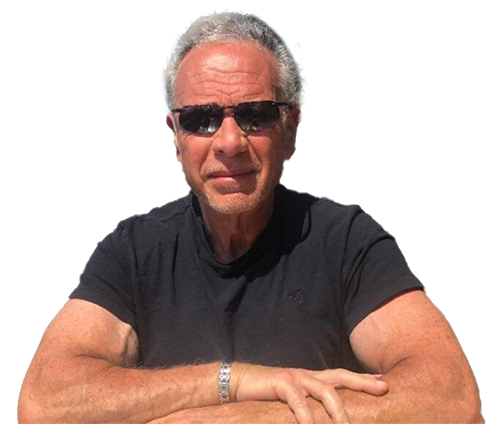
Perry Pappas is a Senior Vice President of Reverse Mortgage Sales at Jet Direct Mortgage with over 26 years of mortgage industry experience. He specializes in retirement housing strategy, senior liquidity planning, and helping older homeowners evaluate how home equity may fit into long-term financial stability. Perry is known for simplifying complex retirement financing concepts and providing straightforward education around modern reverse mortgage strategies.
Call/Text: 516-851-0696
Jet Direct Mortgage | 4875 Sunrise Hwy, Bohemia, NY 11716
Perry Pappas NMLS #3771 | Jet Direct Mortgage NMLS #3542 | Equal Housing Lender